

The gum decides how long an implant lasts
Periodontitis is the most common cause of the bone loss that later complicates surgery.
From periodontitis to bone loss
Periodontitis is a chronic infection that destroys the bone holding the teeth. It advances painlessly for years, which is why it is diagnosed late: by the time a tooth moves, the bone that has gone does not come back on its own.
That lost bone is exactly what is missing later when an implant needs placing. In a surgical centre, periodontics is therefore not a parallel appointment: it is the first stage of the same treatment.
Measured, not eyeballed
The diagnosis is a six-point probing per tooth, recorded in writing and backed by radiographs. It gives a figure per tooth, which is the only thing that lets you compare in six months whether the treatment is working. A visual assessment cannot do that.
Peri-implantitis: the same disease, around the implant
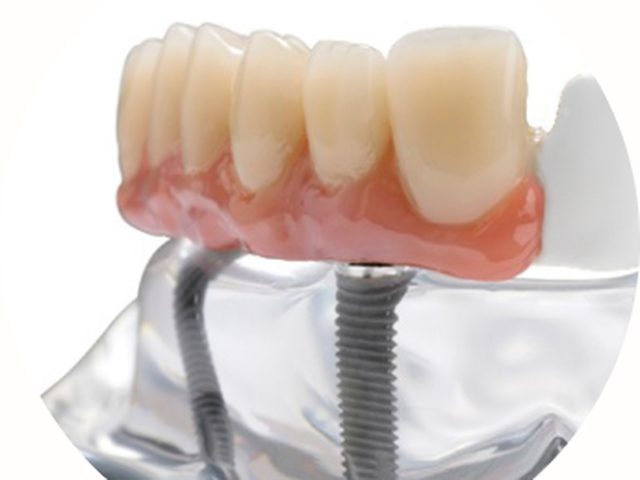
An implant cannot decay, but the bone around it is lost by the same mechanism as around a natural tooth. If the disease is not stabilised before operating, the implant repeats the history of the tooth it replaced.
If what you need is a cleaning or routine periodontal maintenance, that is done at our clinic in central Marbella.
-
Stops bone loss
The aim is to halt progression before teeth are lost.
-
Measured diagnosis
Six-point probing per tooth and radiographic control, not a visual estimate.
-
Tailored maintenance
Check-up intervals are set by your actual risk, not a standard calendar.
At this clinic
Periodontics in a surgical centre
Almost every patient who arrives here with severe bone loss has the same story behind them: periodontitis that went undiagnosed for years. The missing bone did not disappear on its own — the disease took it.
That is why periodontal treatment comes before surgery and not after. Full six-point probing per tooth, radiographic monitoring and stabilisation: if the disease is still active, peri-implantitis will make the implant repeat the history of the tooth it replaces.
Stabilising does not always mean keeping. Part of the work is deciding which teeth have a prognosis and which do not, and that conversation is more honest at the start than halfway through a rehabilitation.
- Full periodontal probing, recorded so progress can be measured.
- Stabilisation before any surgery is planned.
- A prognosis per tooth, explained before starting.
- Periodontal maintenance after the rehabilitation.
How it is treated
-
Periodontal study
Full probing, radiographs and a baseline record so progress can be measured.
-
Treatment phase
Scaling and root planing by quadrant, with laser or surgery where the case requires it.
-
Maintenance
Regular reviews matched to your risk. This phase determines the long-term outcome.
Who carries it out
The team performing periodontics in Nagüeles
-

Periodontics and aesthetics
Common questions
Frequently asked questions about this treatment
01 Is periodontitis what left me without bone for implants?
In most cases, yes. It is a chronic infection that destroys the bone holding the teeth, and it advances for years without pain. By the time the teeth are lost, the missing bone had already gone. That is why periodontal treatment is not a formality before surgery: it is what stops you having to repeat it.
02 Can I have implants if I have periodontitis?
Not until the disease is stabilised. Bone around an implant is lost by the same mechanism as around a natural tooth, so operating on active periodontitis is scheduling a failure in the medium term. First it is treated, then the result is measured, and only then is the rehabilitation planned.
03 What is peri-implantitis?
The same disease, but around an implant. The implant cannot decay, but the bone supporting it can be lost if hygiene slips or if the periodontitis was never brought under control. It is diagnosed with probing and radiographs, just as in a tooth, and the earlier it is caught the more can be saved.
04 Can I recover the bone I have already lost?
Periodontal treatment stops the loss, but destroyed bone does not come back on its own. What can be done is to rebuild volume surgically where an implant is going to sit, with guided bone regeneration. They are two different things, and in many cases both are done, in that order.
05 Do all the loose teeth have to come out?
Not as a starting point. Part of the work is giving a prognosis tooth by tooth: which can be kept with treatment and which will not survive the later rehabilitation. It is a conversation worth having at the beginning, with the probing figures in front of you, rather than halfway through treatment.
Other treatments you may be interested in
First assessment
Request your periodontics assessment
- We call you to understand your case before proposing anything.
- Diagnosis with digital planning and a fixed written quote.
- No obligation: if you do not need treatment, we will tell you.
Prefer to talk to us directly? 951 500 100 · WhatsApp